
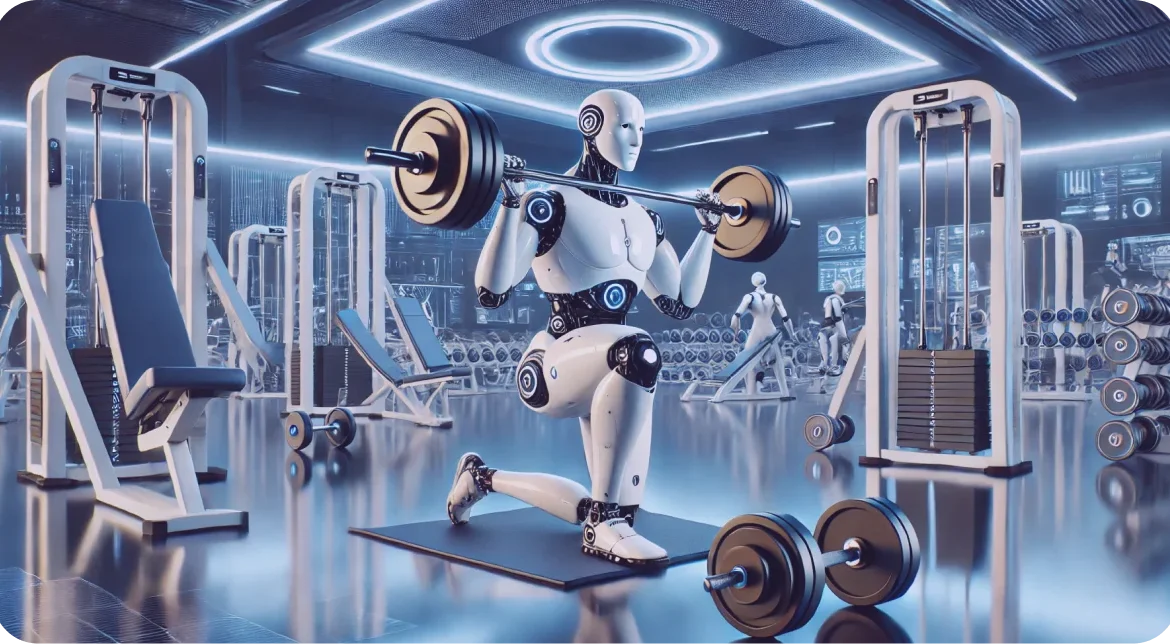
AI in Physical Education and Sports Science: The Quantified Athlete
Introduction: The End of the “Eye Test”
For over a century, Physical Education (PE) was the only part of the school day where technology was largely absent. Mastery was measured by “the eye test”—a teacher watching a student’s form during a sprint or a jump. In 2026, the gymnasium has been transformed into a data-rich laboratory. The rise of Computer Vision and Biometric AI has moved PE from general activity to Precision Physical Literacy.
This shift is not about creating professional athletes; it is about using AI to help every student understand their own body’s mechanics, prevent injury, and find a personalized path to lifelong health.
1. Computer Vision: The Virtual Coach
The most significant hardware shift in 2026 is the use of standard tablet and smartphone cameras equipped with Pose Estimation AI.
- Real-Time Biomechanical Analysis: When a student performs a squat or throws a javelin, AI overlays a skeleton-tracking grid on their video feed. It identifies “mechanical leaks”—such as a knee caving in or a shoulder out of alignment—and provides instant, visual feedback.
- Gamified Skill Acquisition: PE apps now function like “Guitar Hero” for physical movement. Students follow digital avatars in AR (Augmented Reality), and the AI scores their accuracy in mirroring the correct form, turning the “drudgery” of repetitive drills into a high-engagement game.
2. Wearables and the “Internal Dashboard”
By 2026, low-cost biometric sensors have moved from elite sports into the standard school locker room.
- Load Management: AI analyzes heart rate variability (HRV) and recovery data to tell a student (and teacher) when they are “overtraining.” This prevents the burnout and “hidden” injuries that often lead students to quit sports in their teenage years.
- Metabolic Personalization: Rather than a standard “12-minute run” for everyone, AI suggests personalized intensity zones based on a student’s current cardiovascular fitness. This ensures that every student—from the naturally athletic to the sedentary—is challenged at a level that is safe and effective for them.
3. Inclusive Physical Education: Leveling the Playing Field
AI is proving to be a revolutionary tool for Adaptive PE.
- Assistive Feedback for Disabilities: For students with visual impairments, AI-powered wearables use spatial audio or haptic pulses to guide them around a track or help them orient toward a ball equipped with a sonic sensor.
- Prosthetic Optimization: For students with physical limb differences, AI helps tune their prosthetic settings in real-time, analyzing their gait to ensure maximum efficiency and comfort during physical activity.
4. The Ethics of the “Quantified Body”
The digitization of physical health brings intense ethical scrutiny in 2026.
- Body Image and Privacy: Schools must ensure that biometric data is used to promote “function” rather than “aesthetic.” There are strict “Data Firewalls” preventing physical health data from being shared with school admissions or insurance companies.
- Avoiding “Bio-Deterministic” Sorting: There is a risk that AI might “scout” children too early, telling a 10-year-old they “don’t have the genetics” for a certain sport. Educators are emphasizing Growth Mindset pedagogy, ensuring that AI is used to improve personal performance rather than limit potential.
5. Teacher Training: The “Bio-Analyst” Educator
PE teachers in 2026 are being retrained as Human Performance Analysts.
- Data Translation: Instead of blowing a whistle, the teacher spends their time interpreting the class “Heat Map.” If the AI shows that the class’s average heart rate hasn’t reached the target zone, the teacher pivots the activity in real-time.
- Focus on Longevity: The curriculum has shifted from “competitive sports” to “longevity skills.” Teachers use AI to help students build a “Health Portfolio” that they will take with them after graduation, containing their optimal exercise patterns, recovery needs, and nutritional sensitivities.
Conclusion: A Lifelong Connection to Movement
By late 2026, AI has successfully rebranded “Gym Class” as “Human Performance Science.” By providing every student with a deep, data-driven understanding of their own biology, we are moving away from a world where people “retire” from exercise after high school.
The goal of the Quantified Athlete is not to win medals, but to ensure that every human being has the literacy and the confidence to move their body effectively for the rest of their lives.
Aluminium Sheet Kampala Uganga
Galvanized Sheets Kampala Uganda
Leave a Reply